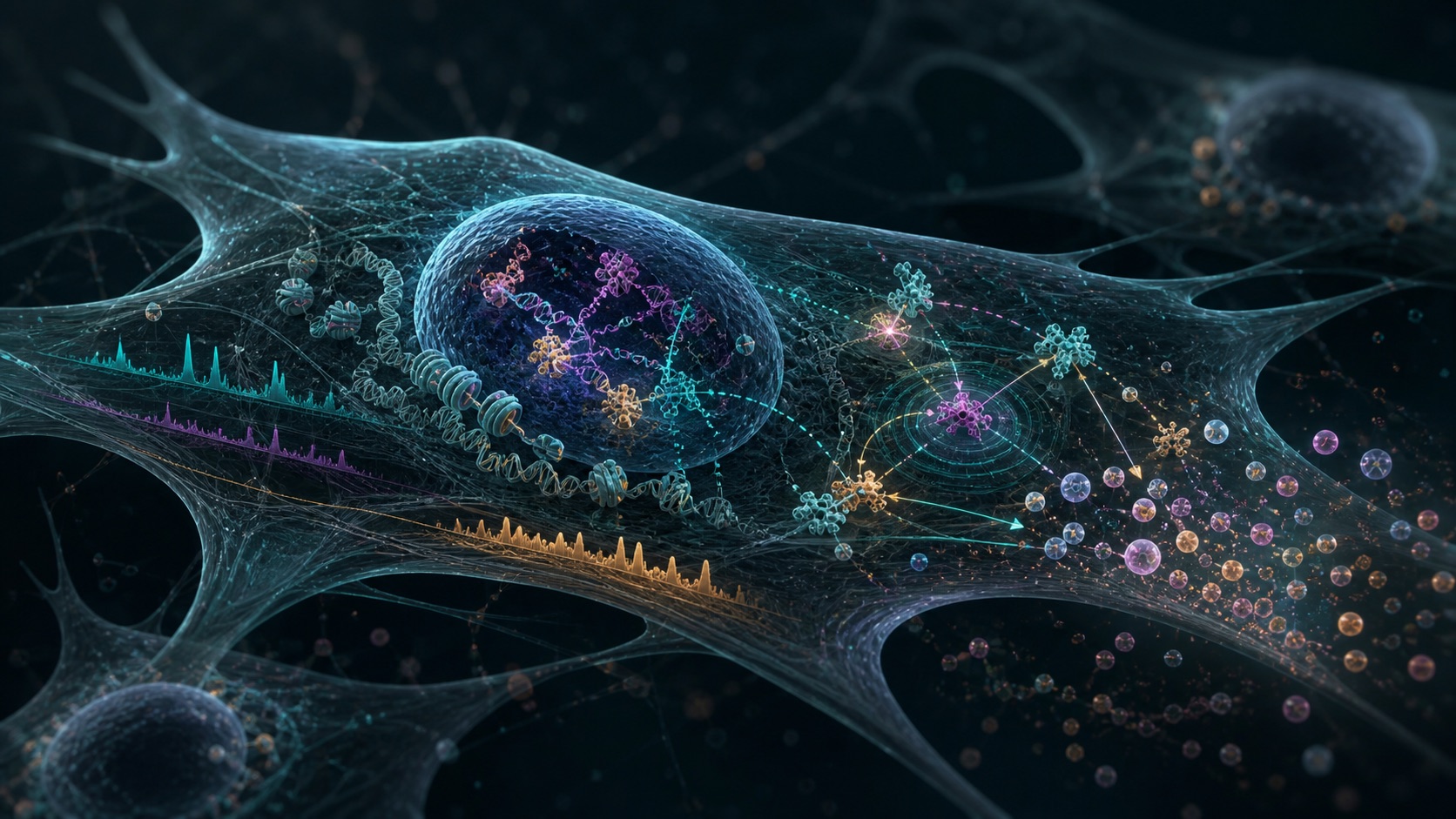
This teaching introduces the molecular basis of cellular senescence and aging, with a focus on how stress-response pathways, chromatin regulation, metabolism and inflammatory programs interact to shape cell fate decisions.
The course connects fundamental mechanisms to pathophysiological contexts, including tumor suppression, tissue aging, cancer biology and metabolic homeostasis. It also uses examples from functional genomics and multi-omic studies to show how contemporary molecular biology can move from descriptive profiles to mechanistic hypotheses.
Core topics include cell-cycle checkpoint pathways, p53 and pRB signaling, senescence-associated chromatin remodeling, SASP regulation, metabolic rewiring, links between DNA damage and cell fate, and the contribution of senescent cells to aging-related diseases. Depending on the audience, the course can also introduce current approaches used to profile senescence, including RNA-seq, ATAC-seq, CUT&RUN, ChIP-seq, metabolomics and single-cell/spatial extensions.
Pedagogically, I use senescence as a systems biology case study: students can connect molecular mechanisms, cellular phenotypes, omic data and pathophysiological consequences within a single biological framework.