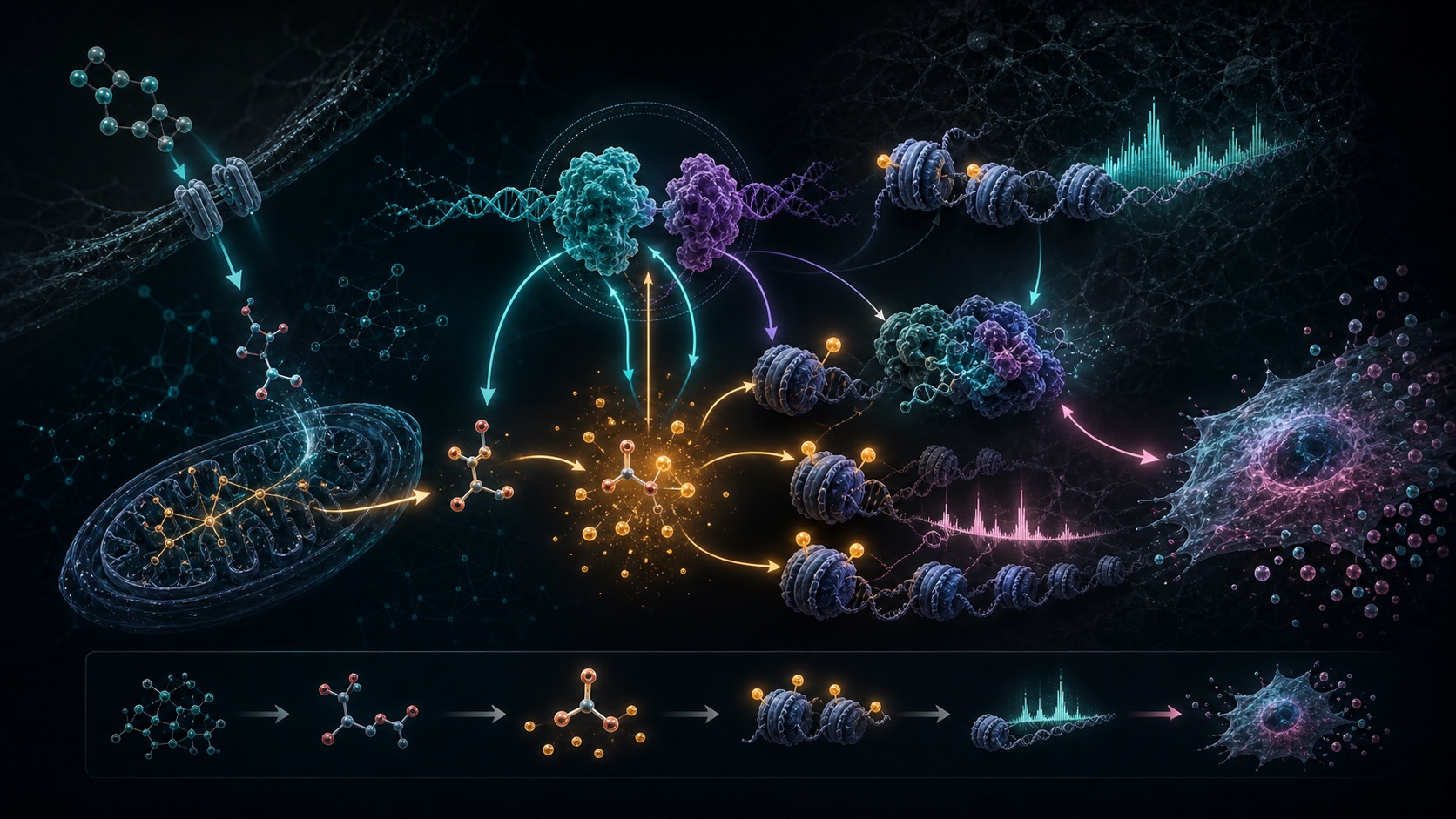
My current research at the Montpellier Cancer Research Institute focuses on how metabolic rewiring is converted into durable chromatin and transcriptional states during senescence and aging. Cellular senescence relies on checkpoint pathways controlled by pRB and p53, but these regulators do more than arrest the cell cycle: they also control metabolic homeostasis, mitochondrial function, stress adaptation and chromatin regulation.
A central entry point of this project is E4F1, a multifunctional component of the p53/pRB network. E4F1 controls genes encoding subunits and regulators of the pyruvate dehydrogenase complex, thereby influencing acetyl-CoA production. Because acetyl-CoA is both a metabolic intermediate and a substrate for protein acetylation, this pathway provides a direct mechanistic bridge between metabolic state and chromatin regulation.
Using primary cellular models, gain- and loss-of-function perturbations, and genome-wide assays, I investigate whether E4F1-driven pyruvate metabolism contributes to senescence by reshaping chromatin accessibility, histone acetylation and p53 transcriptional output. The project combines ATAC-seq, CUT&RUN for histone acetylation marks and p53, RNA-seq, metabolomics and targeted molecular biology to connect metabolic fluxes with regulatory elements and transcription factor activity.
This axis is also being explored in vivo in aging mouse models. By transiently modulating p53 activity during physiological aging and metabolic challenges, the project aims to determine whether age-associated engagement of p53 into pro-senescence programs compromises its ability to support adaptive metabolic homeostasis. The broader goal is to identify actionable nodes at the interface of metabolism, epigenetics and aging-related tissue dysfunction.