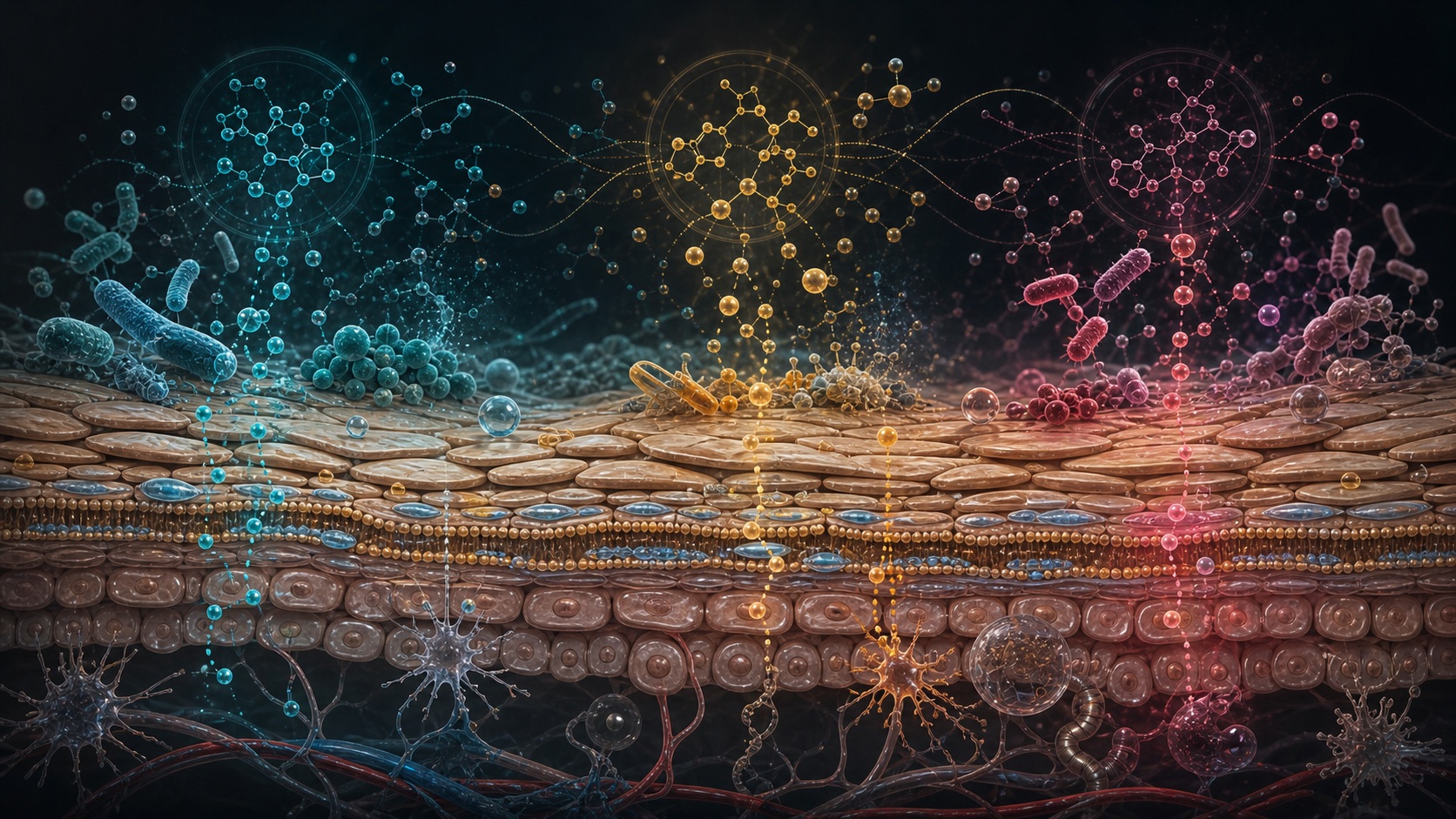
During my postdoctoral work at Johnson & Johnson, I investigated how the skin microbiome and metabolome jointly contribute to skin physiology, maturation and inflammatory risk. The skin is not only a passive barrier: it is an immuno-metabolic interface continuously exposed to environmental stressors and resident microbial communities.
Most microbiome studies focus on taxonomic composition, but microbial function is often mediated through metabolites produced, transformed or degraded at the skin surface. To capture this functional dimension, I integrated 16S rRNA profiling and targeted metabolomics from non-invasive skin surface samples, using multivariate and network-based approaches to connect microbial communities with metabolite patterns.
In infant skin, this approach revealed three distinct microbe-metabolite clusters. One was dominated by Cutibacterium and associated with hydrophobic barrier-related metabolites; another linked Staphylococcus with amino acids relevant to water-holding capacity and skin pH regulation; and a third was characterized by Streptococcus with a weaker metabolomic association. These results supported the concept that skin biomes emerge early in life and may influence later barrier physiology or inflammatory trajectories.
I also contributed to broader studies of skin maturation from birth to ten years of age, integrating barrier function, structural parameters, pigmentation, metabolomics and microbiome composition. Together, these projects strengthened my interest in systems-level analyses of host-microbe interactions and translational biomarker discovery.